You can usually feel when text was written by AI. The signs of AI writing are consistent enough to name and catch: an em dash in every other sentence, openings that clear their throat before saying anything, the same three-part rhythm on repeat, and a small set of tell words. This is the field guide to those tells, and the more useful half, how to strip them so your writing reads like you wrote it.
One caveat before the list. The goal is not to beat an AI detector. Those are unreliable, and they flag plenty of human writing as machine-made, especially from people who learned English second. The goal is writing that sounds like a person, because one wrote it.
The em dash, in every other sentence
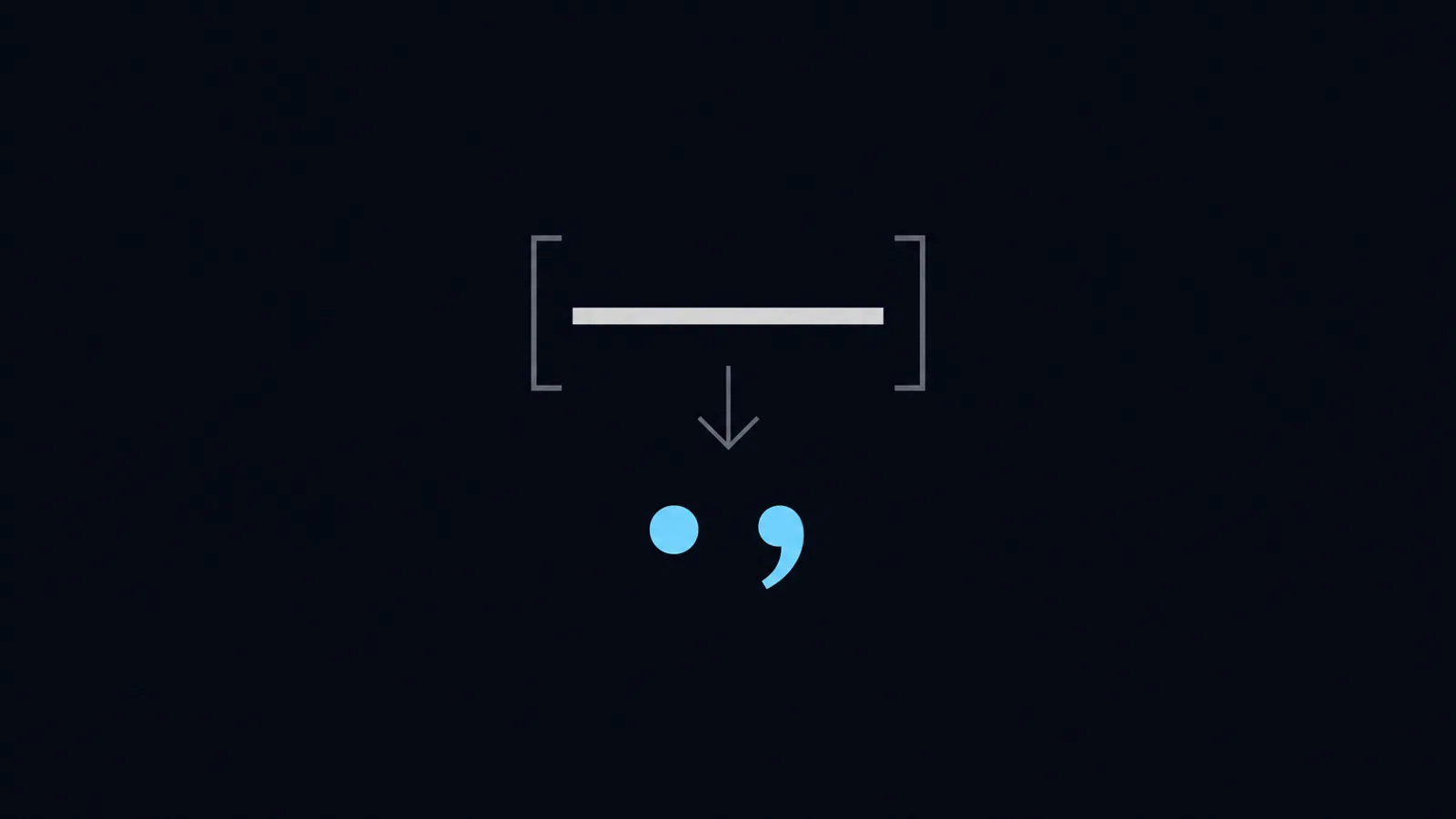
The loudest tell by a distance. Models reach for the em dash constantly, dropping it where someone typing quickly would use a comma, a period, or nothing at all. One or two in a long piece is normal. One in every other line of a Slack message is not how people type. If a draft is stitched together with them, that alone reads as machine-made. There is a whole post on why AI writing loves the em dash and how to remove it.
Openings that clear their throat
AI writing warms up before it says anything. "In today's fast-paced world." "It is important to note that." "Whether you are a beginner or an expert." All runway, no takeoff. A person starts on the point. The usual fix is to delete the first sentence of a paragraph and begin on the second, which is where the content actually was.
The rule of three, on repeat
Everything arrives in threes. "Clear, concise, and compelling." "Fast, reliable, and secure." One tricolon is a pleasant rhythm. Three per paragraph is a model that learned the pattern and cannot stop. Real writing is lumpier than that. Break it: cut one item, or let a list run to two or four instead of the tidy three.
Tell words: delve, leverage, robust
Some words appear far more in AI text than in speech. Delve, leverage, robust, seamless, underscore, tapestry, boast, elevate. Any one of them is fine on its own. In density, they give the game away. Swap each for the word you would actually say. You leverage nothing in conversation. You use it.
Hedging both ways at once
Models dislike committing. They present both sides, weigh them evenly, and land nowhere. On one hand this, on the other hand that. A person with an opinion just says the thing. If a paragraph could be deleted without changing what you actually think, it probably came from a model trying to sound balanced.
Suspiciously even rhythm
Human writing puts short sentences next to long ones. It speeds up, then slows down. AI writing tends to hold one medium length for paragraph after paragraph, each sentence about as long as the last. The evenness itself is the tell. Vary it on purpose. A three-word sentence resets the pace.
How to strip the tells out
The tells are easier to remove than to avoid in the first place. Run this pass over any draft, whether a model helped or not.
- Kill the em dashes first. Replace each with a period, a comma, or a rewrite. This one change does the most work.
- Cut the runway. Delete the opening sentence of most paragraphs and start on the actual point.
- Break the threes. Turn one tricolon into a single strong item, or an uneven list.
- Swap the tell words for how you would say it out loud.
- Vary the rhythm. Put a short sentence next to a long one, then read back for evenness and break it.
- Read it aloud. If it does not sound like you talking, it is not finished.
Doing it without the manual pass
If you would rather not scrub every message by hand, a rewriter built to avoid the tells helps. WriteText is our own Mac app that rewrites selected text in place using your own AI key, and it bans em dashes in its output by design. The rewrites come back with commas, periods, and colons instead, so the loudest tell is gone before you start editing. It shows a diff too, so you can see exactly what it changed.
The honest limit: no tool makes AI text undetectable, and that is not what this is for. WriteText is free in early access, which means free for now, and it is a private project, not open source. It removes the tells. It does not launder anything.
When the tells are fine
Not every em dash is a crime, and not every draft needs this pass. In a published essay, the em dash is just punctuation. In a private first draft nobody else will read, leave the tells and keep moving. The pass earns its time when the writing represents you: a client email, a job application, a post with your name on it. There, sounding like yourself is the point, and a tell that says a bot wrote this works against you whether or not one did.
Start with the em dash. It is the single highest-return edit, and once you notice it you cannot unsee it. Everything else here is a bonus. For the deep version on that one tell, read why AI writing uses em dashes. If you are switching writing tools while you are at it, we compared the Grammarly alternatives for Mac separately. And if you would rather the rewrite was done for you, you know where WriteText is.
Sources and further reading
Frequently asked
Look for a cluster of tells, not one. Em dashes in casual text, throat-clearing openings like "in today's fast-paced world," everything arriving in threes, and tell words like delve and leverage. Any one is innocent. Several together usually mean a model wrote it.
In casual writing, yes, it is the loudest one. Models use the em dash far more than people typing quick emails or messages do. It is legitimate punctuation, so the tell is density and context, not the mark itself. One in an essay is fine. One in every other Slack line is not.
Cut the em dashes, delete the throat-clearing first sentences, break the rule of three, swap tell words for how you actually talk, and vary sentence length. Then read it aloud. If it does not sound like you, keep editing.
Not reliably. They miss edited AI text and flag human writing as machine-made, and research has found they are biased against people who learned English as a second language. Treat a detector score as a weak signal, not proof.
The common ones are delve, leverage, robust, seamless, underscore, elevate, boast, and tapestry, plus stock phrases like "it is important to note" and "in today's fast-paced world." The problem is density. Replace each with the plain word you would say out loud.
It removes the loudest one. WriteText rewrites your selected text with your own AI model and bans em dashes in its output by design, so rewrites come back with commas, periods, and colons instead. It is not an AI-detector eraser, and no tool makes AI text undetectable.
WriteText is built by a small team who wanted in-place AI editing that just works. We made it because our own inboxes needed it.